GPT Image 2.5 prompt and editing guide for creators
How to prompt and edit with GPT Image 2.5: the six-part brief, Sketch, comment-based edits, multi-turn API turns, quality settings, and transparent PNG assets — plus the same habits on OmniArt's GPT Image 2.
GPT Image 2.5 rewards a brief you can review, not a longer adjective list. The September 8, 2026 models — ChatGPT Images 2.5, API Flare, and API Sunburst — are built for targeted edits, reference preservation, and faster drafts. They still fail when the prompt mixes five jobs, invents extra copy, or asks the tenth turn to rescue a first frame that was never accepted.
This guide is a repeatable procedure. Keep the prompt text in English when you paste it. GPT Image 2 on OmniArt already understands the same six-part structure; Sketch, on-image comments, xhigh / max, and first-class transparent output are the 2.5-specific steps.
Note
GPT Image 2.5 is not in the OmniArt picker at publication time. Practice the brief on GPT Image 2, and use ChatGPT or the API for Sketch, comment pins, and the new quality enums.
The six-part brief (still the default)
Use this order on every surface — ChatGPT, Image API, Responses API, and OmniArt:
[Deliverable and style] + [subject] + [environment] + [lighting and material] + [composition and hierarchy] + [exact constraints]
A compact example:
Editorial product photograph of a matte lilac wireless speaker on a warm ivory plinth. Soft window light from camera left, subtle coral bounce, crisp fabric texture. Three-quarter view, centered vertically with generous negative space on the right. 4:5 aspect ratio. No hands, no extra products, no visible logo, no border.
The structure makes failures diagnosable. Wrong product → subject or reference role. Wrong layout → composition. Wrong type → shorten the quoted copy before adding style language.
If you already use the GPT Image 2 prompt guide, do not throw it out. 2.5 adds tools around that brief. It does not replace it.
Six habits that still earn their keep
- Name the deliverable first. Poster, packshot, sticker, merch mock, and app icon imply different layout rules.
- Use full sentences for relationships. Say what sits above, behind, or beside something else.
- Quote exact visible copy. Keep it short, preserve capitalization, and say where it belongs.
- Give every input image one role. Identity, product geometry, pose, palette, or environment — not all five.
- Change one failure at a time. A full rewrite destroys the comparison between turns.
- Draft cheap, lock expensive.
low/ Flare / 1K for composition;highor Sunburst only after the frame is accepted.
Workflow 1: Sketch, then describe
ChatGPT Images 2.5 adds Sketch. Type @Sketch, draw the layout, and pair it with a text brief. The drawing is a composition reference, not a finished illustration. Keep it ugly on purpose: boxes for furniture, arrows for light, a stick figure for scale.
Do this:
- Draw only structure — horizon, subject block, text band, negative space.
- In the same message, paste the six-part brief. Tell the model the sketch is the layout, and the text is style, materials, and copy.
- If the first frame is close, comment on the region that is wrong. Do not redraw the whole sketch unless the composition itself is wrong.
Prompt to paste after a room-layout sketch:
Use the sketch as the floor-plan and camera position. Photoreal interior, late-afternoon window light from the left, pale oak floor, warm plaster walls, one lilac lounge chair matching the block on the right, one low coral ceramic on the table. No extra furniture, no wall art with readable text, no people.
Sketch is a ChatGPT interaction. The Image API does not document an equivalent sketch parameter; a scanned doodle uploaded as a reference image is the API stand-in, with an explicit role: "Image 1 is a composition sketch only. Do not copy the line style."
Workflow 2: Comment on the thing that is wrong
OpenAI's consumer pitch is comment-based edits: mark the object, say the change, leave the rest of the frame. The API equivalent is a short edit prompt plus the previous image, optionally with a mask, and action: "edit" on the Responses API tool.
Write comments like production notes, not new mood boards.
| Weak comment | Stronger comment |
|---|---|
| Make it pop | Increase contrast on the speaker grille only; keep the plinth and wall unchanged |
| More premium | Replace the plastic-looking buttons with brushed warm silver; do not change shape or placement |
| Fix the text | Change the poster headline to exactly "FUTURE MADE HUMAN"; keep size, tracking, and position |
| Different vibe | Keep subject, pose, and crop. Change only the time of day to blue hour |
The test is simple: if a retoucher could do the note in five minutes, the model should attempt only that note. If the note is "make it a campaign," you are asking for a new generate, not an edit.
Workflow 3: Multi-turn without melting the subject
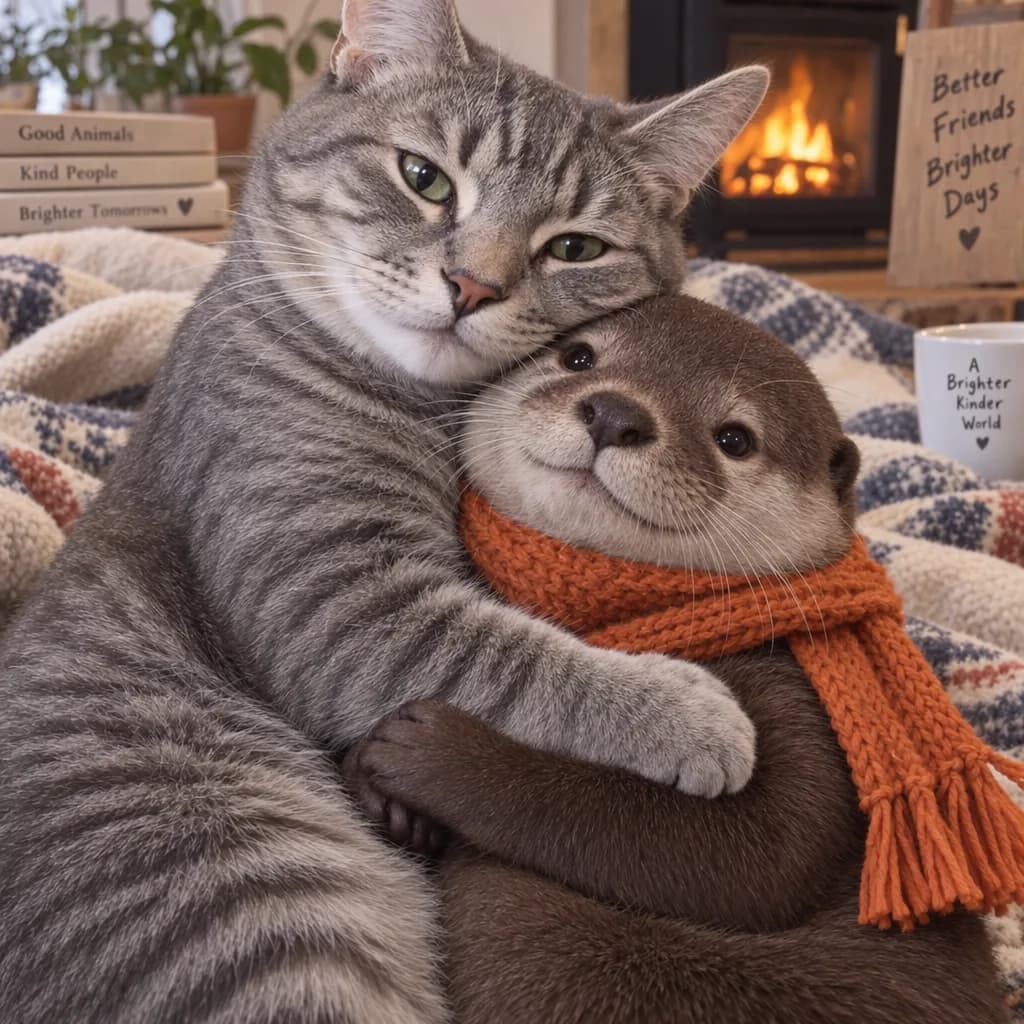
OpenAI's documentation example is the right pattern: generate a gray tabby cat hugging an otter in an orange scarf, then send a second turn — "Now make it look realistic" — with the previous image in context. The scarf, the hug, and the two animals are supposed to survive the style shift.
API rules that matter:
- Image API: one-shot generate or edit. Good for a packshot or a masked inpaint.
- Responses API: keep
previous_response_idor pass theimage_generation_callid back in. That is how multi-turn fidelity is supposed to work. action: "auto"lets the tool generate or edit.action: "generate"always makes a new image.action: "edit"errors if no image is in context.- Force generate when you want a new composition. Force edit when the composition is already accepted.
On ChatGPT, the same rule is social: do not start a new chat for "make the mug coral." Stay in the thread so earlier edits remain in context. OpenAI says 2.5 is more likely to carry those edits through; you still have to avoid rewriting the whole brief every turn.
Workflow 4: Transparent assets
Both Flare and Sunburst support background: "transparent". Set output_format to png or webp. JPEG cannot hold an alpha channel, so it is the wrong format for stickers, merch prints, game sprites, and infographic icons.
Prompt pattern:
Centered sticker illustration of a small coral teapot with a lilac stripe, clean vector-like edges, even studio lighting, no drop shadow, no table, no background objects. Transparent background. Padding of 8% on all sides. No text, no watermark, no border.
Then inspect the actual alpha, not the checkerboard in a compressed preview. Edges, steam, hair, and glass are the usual leaks. If the first transparent Flare pass is messy, rerun the same prompt on Sunburst before you start masking by hand.
On OmniArt today, generate the subject on a flat studio field with GPT Image 2 and knockout in your editor if you need alpha this week. Do not pretend the 2.0 preview flag is the same as 2.5's documented transparent path.
Workflow 5: Climb the quality ladder on purpose
GPT Image 2.5 adds xhigh and max on top of low, medium, and high. Default is auto. OpenAI's own guidance is to use low for drafts and compare higher settings for finals, because quality, latency, and token count move together.
A working ladder:
low+ Flare — does the layout and copy exist?mediumorhigh+ Flare — is the material believable?highorxhigh+ Sunburst — does the approved frame survive a product crop?max— only if a named detail still fails atxhigh(stitches, small type, jewelry).
Do not jump to max on an unaccepted composition. You will wait longer to learn the headline is still wrong. Streaming partials (partial_images 1–3) can make the wait feel shorter; each partial bills 100 extra image output tokens.
Copy-ready prompts
These stay in English in every locale version so you can paste them unchanged. Swap only the product, copy, and aspect ratio.
Packshot with a geometry reference
Use image 1 as the exact product-geometry reference. Preserve silhouette, button placement, seam lines, camera height, and contact shadow. Photoreal ecommerce packshot on a warm ivory seamless sweep, large softbox from upper left, faint coral rim. No hands, no props, no logo, no text. Aspect ratio 4:5.
Bilingual poster
Contemporary poster, warm off-white textured paper. Large headline at the top reads exactly "FUTURE MADE HUMAN". Directly below, smaller Chinese text reads exactly "未来,由人创造". Date "18 OCT 2026" and city "SHANGHAI" in a small block at bottom left. One abstract lilac ribbon, one coral accent, generous margins, no extra words. Aspect ratio 2:3.
Transparent merch graphic
Flat merch graphic of a simplified coral sunburst mark with a small lilac dot at the center, crisp geometric edges, even fill, no gradients, no outline, no drop shadow. Transparent background, centered, 10% padding. No text. Square.
Style change that must keep identity
Keep the same two characters, pose, wardrobe, and orange scarf from the previous image. Change only the rendering to photoreal daylight, shallow depth of field, 50mm. Do not add objects, do not change species, do not recolor the scarf.
Surgical background swap
Keep the product, label, and camera angle from image 1. Replace only the background with a matte lilac cyclorama. Match the original lighting direction. Do not restyle the product materials.
Review each result against one list: copy, identity, geometry, background, and extras the prompt forbade. If two items fail, fix the more expensive one first (usually copy or geometry).
Pick Flare, Sunburst, or GPT Image 2
| Situation | Model |
|---|---|
| Exploring layouts and copy | Flare at low / medium, or GPT Image 2 Low on OmniArt |
| Transparent sticker or icon | Flare, then Sunburst if edges fail |
| Multi-turn product or campaign edit | Sunburst |
| You need to ship inside OmniArt today | GPT Image 2, with the same six-part brief |
| Overnight bulk jobs that need Batch pricing | GPT Image 2 (2.5 has no listed Batch rates) |
The version comparison is in GPT Image 2.5 vs GPT Image 2. The two-model split is in Flare vs Sunburst. What shipped on September 8 is in the launch rundown.
Limits to write into the brief
OpenAI still documents these constraints for the 2.5 models:
- Complex prompts can take up to two minutes.
- Text can still sit in the wrong place or lose clarity — quote fewer words, not more adjectives.
- Recurring characters and brand marks can drift across separate generations. Reuse the accepted image as a reference instead of regenerating from text.
- Dense layouts can still misplace objects. If the sketch is doing the layout work, say so.
- Policy blocks return
moderation_blocked. Do not retry the same prompt; change the request.
Provenance is automatic on OpenAI's side (C2PA plus SynthID). That does not replace your own review of likeness, brand, and claimed real-world facts.
Getting started on OmniArt
Open the image workspace, choose GPT Image 2, and run one of the copy-ready briefs at Low. If layout and copy pass, raise detail or resolution once. If they fail, change one line of the prompt, not the whole paragraph.
When the still is accepted, send it to video from the same account — Seedance, Veo, MiniMax H3, or Grok Imagine — without rebuilding the product in another tool. The 2.5 editing habits above are how you keep that still stable; OmniArt is where you can already combine it with motion, voice, and music.
Ready to create?
Start generating amazing content with AI