GPT Image 2.5: what OpenAI shipped on September 8, 2026
OpenAI launched ChatGPT Images 2.5 on September 8, 2026: sharper details, up to 50% lower latency, Sketch, templates, and two API models named Flare and Sunburst. Here is what actually shipped, what remains a provider claim, and how it sits next to GPT Image 2 on OmniArt.
OpenAI released ChatGPT Images 2.5 on September 8, 2026, and split the API side into two models: gpt-image-2.5-flare and gpt-image-2.5-sunburst. The company says people now create more than 3 billion images a week across ChatGPT Images and the GPT Image API. The useful question is not whether the version number went up. It is which part of the launch is a ChatGPT product feature, which part is an API model you can call, and what still has to be measured on a real brief.
GPT Image 2 is already in OmniArt's image workspace. GPT Image 2.5 is not in the picker yet. This article is a capability rundown from OpenAI's launch post, API docs, pricing page, and system card — not a claim that the new models are selectable on OmniArt today.
Note
Every specification below is attributed to OpenAI's September 8, 2026 materials. Latency, quality, and editing claims are provider statements until you run the same prompt, references, and pass/fail criteria on your own work.
What GPT Image 2.5 actually is
The launch uses two names, and they are not interchangeable.
| Name | Where it lives | What it is |
|---|---|---|
| ChatGPT Images 2.5 | ChatGPT, ChatGPT Work, and Codex | The consumer image experience, including Sketch, templates, comment edits, and prompt sharing |
| GPT-Image-2.5 Flare | Image API and Responses API | OpenAI's default API model for everyday generation: quality and editing improvements at lower latency |
| GPT-Image-2.5 Sunburst | Image API and Responses API | The precision API model for tighter control across edits, with longer generation times |
Snapshots lock the September 8 build: gpt-image-2.5-flare-2026-09-08 and gpt-image-2.5-sunburst-2026-09-08. Both accept text and image inputs and output images. Both support inpainting. Neither is a chat-completions or batch model in the current catalog.
If you only need one image from one prompt, OpenAI points you at the Image API. If you want conversational, multi-turn editing, it points you at the Responses API with a mainline model (the docs use gpt-6-astra in examples) calling Flare or Sunburst as the image-generation tool.
What OpenAI says improved
The launch post groups the model work into four production problems rather than a single "prettier pictures" claim:
- Look. More natural lighting and richer textures.
- Identity. Better preservation of subjects from reference photos.
- Edits. Change only the requested element, including across complex subjects and backgrounds, and keep earlier edits intact across multiple turns.
- Speed. Image generation latency reduced by up to 50% compared with Images 2.0.
OpenAI also says Images 2.5 renders real-world information more accurately, handles more complex layouts including transparent backgrounds, and holds a requested visual style more consistently. The API video is more specific on the split: Sunburst is positioned for visual fidelity and instruction following "down to which hand someone writes with"; Flare is positioned as more than 50% faster than GPT Image 2. The launch post separately describes Flare as delivering higher-quality images than GPT Image 2 at 50% lower latency. Those two phrasings are not identical. Treat them as marketing copy and measure both quality and time on the jobs you actually reject today.
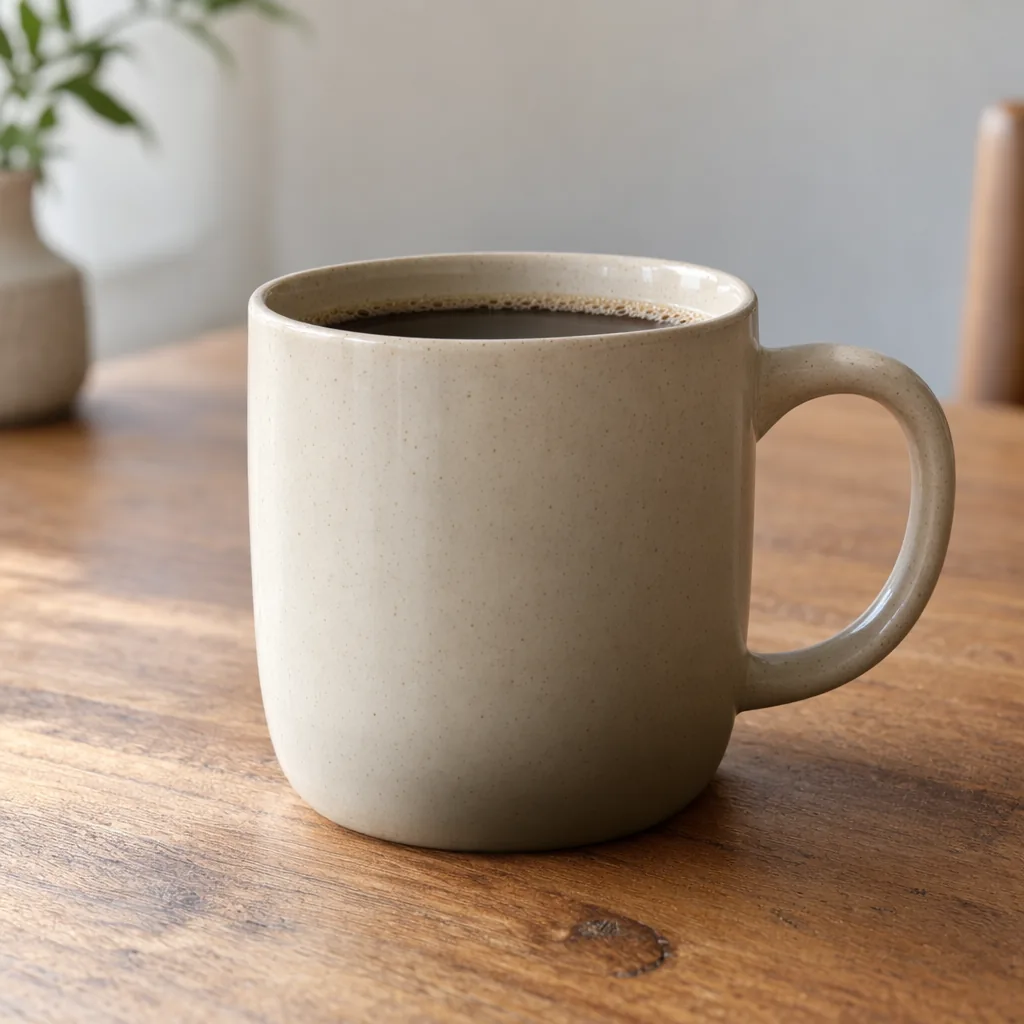
New ChatGPT tools: Sketch, templates, comments, sharing
The ChatGPT surface is a product release sitting on top of the model. Four tools shipped with Images 2.5:
- Sketch. Type
@Sketchin ChatGPT to draw a layout, then pair the sketch with a text description. OpenAI's examples include a room-layout doodle becoming an interior render, and a figure outline becoming an illustration. This is a ChatGPT interaction, not a documented Image API parameter. - Templates. Starting points for common formats. Named options include Poster and Merch.
- Comment-based edits. Place a comment on the generated image to change only that region or object, instead of rewriting the whole prompt.
- Prompt sharing. Share the prompt behind an image so someone else can rerun the idea with their own photos and details.
Availability is broad: OpenAI says Images 2.5 is rolling out to ChatGPT, ChatGPT Work, and Codex users across all tiers on desktop, mobile, and web. Codex getting the same image models is the signal that OpenAI wants this family inside coding and agent workflows, not only in a consumer canvas.
What the API actually exposes
The developer surface is more concrete than the ChatGPT feature list.
| Control | GPT Image 2.5 Flare and Sunburst |
|---|---|
| Quality | low, medium, high, xhigh, max, auto (default auto) |
| Size | Recommended 1024x1024, 1536x1024, 1024x1536, plus custom WIDTHxHEIGHT |
| Custom size rules | Multiples of 16, aspect between 1:3 and 3:1, neither edge above 3840px, 655,360–8,294,400 total pixels |
| Background | opaque, transparent, or auto |
| Transparent output | png or webp |
| Formats | png (default), jpeg, webp |
| Streaming | Partial images (0–3); each partial adds 100 image output tokens |
| Endpoints | v1/images/generations and v1/images/edits |
Resolutions above 2560x1440 are experimental. Earlier GPT Image models stopped at high quality; xhigh and max are new. Transparent backgrounds were in preview on gpt-image-2; they are documented as supported on both 2.5 models.
OpenAI still lists limits that matter in production: complex prompts may take up to two minutes; text placement and clarity can still fail; recurring characters and brand elements can drift across separate generations; dense layouts can still misplace objects. The model is stronger at instruction following. It is not a layout engine with a guarantee.
For the Flare versus Sunburst decision, see GPT Image 2.5 Flare vs Sunburst. For a version-to-version changelog, see GPT Image 2.5 vs GPT Image 2.
Pricing, batch, and token math
Standard API token rates match GPT Image 2:
| Token type | Input | Cached input | Output |
|---|---|---|---|
| Image | $8 / 1M | $2 / 1M | $30 / 1M |
| Text | $5 / 1M | $1.25 / 1M | not billed (the model outputs images) |
Equal rates do not mean equal cost per image. OpenAI is explicit that token consumption can differ by model and quality setting, and that the GPT Image 2 calculator does not estimate 2.5 consumption. Use the response usage field. Streaming partials add 100 image output tokens each. Responses API calls also bill the mainline model's tokens on top of image generation.
Batch pricing is listed for gpt-image-2 (half the standard image rates) and is not listed for Flare or Sunburst. If your pipeline depends on Batch API discounts, that is a reason to keep GPT Image 2 in the mix rather than assuming 2.5 inherited every 2.0 commercial knob.
Provenance and safety
OpenAI published a ChatGPT Images 2.5 system card on launch day. Two production facts are clear:
- Provenance. C2PA metadata continues, and OpenAI is adding Google DeepMind's SynthID invisible watermark across ChatGPT, Codex, and the API.
- Safety stack. Requests are checked before generation. A safety reasoning model then monitors text and image inputs and inspects the final output. OpenAI says neither Flare nor Sunburst crosses the Bio High or Cyber High thresholds under its Preparedness Framework, and it still applies precautionary biological-risk mitigations.
The card also notes that higher realism raises deepfake risk if safeguards fail. That is a product constraint, not a footnote: reference-photo workflows and likeness edits will keep hitting policy blocks, and the API exposes moderation_blocked with a coarse moderation_details object for logging.
What this means if you already use OmniArt
You do not need to pause production and wait for a picker label. GPT Image 2 remains the OpenAI image model on OmniArt, and the jobs this launch is aimed at — readable layouts, product stills, reference-preserving edits, transparent assets — are already the reason teams pick it next to Nano Banana 2 and Seedream.
| If the 2.5 pitch is really about… | Practical next step on OmniArt today |
|---|---|
| Text, posters, infographics, UI-ish layouts | Keep using GPT Image 2 |
| Photoreal product or lifestyle frames | Compare GPT Image 2 with Nano Banana 2 and Seedream 5.0 Pro |
| Fast iteration on a still | Nano Banana 2 or Nano Banana 2 Lite |
| Turning an approved still into motion | Carry the still into the video workspace |
The habits in the GPT Image 2.5 prompt and editing guide transfer: name the deliverable, quote exact copy, give every reference one job, and change one failure at a time. Sketch, comment pins, and xhigh / max quality are 2.5-specific; the rest of the brief discipline is not.
FAQ
Is ChatGPT Images 2.5 the same as GPT Image 2.5?
Almost. ChatGPT Images 2.5 is the consumer product. GPT Image 2.5 is the API family, split into Flare and Sunburst. ChatGPT tools such as @Sketch and on-image comments are not the same thing as the Image API.
When did GPT Image 2.5 launch?
September 8, 2026, according to OpenAI's launch post, model snapshots, and developer documentation.
Is GPT Image 2.5 on OmniArt?
Not at publication time. GPT Image 2 is the OpenAI image model in the OmniArt workspace. When 2.5 is selectable, it should sit next to that model rather than replace the rest of the image stack.
Did OpenAI cut GPT Image 2 prices?
No. Standard token rates for GPT Image 2, Flare, and Sunburst are the same. The half-price numbers that appear for GPT Image 2 on the pricing page are Batch rates, which Flare and Sunburst do not currently list.
Getting started on OmniArt
Open the OmniArt image workspace and run one acceptance brief through GPT Image 2 and a second model. Keep the prompt, references, aspect ratio, and pass/fail criteria identical. If the brief is text-heavy, score readable copy and hierarchy. If it is a product shot, score geometry, materials, and contact shadows. That comparison is more useful than a launch gallery.
Once a still is approved, move it into video without changing platforms. OmniArt keeps image, video, audio, and music models in one workspace, so the still-image model and the motion model do not have to come from the same provider.
Ready to create?
Start generating amazing content with AI